
Ripstop Fabrics for Workwear
Ripstop fabric is one of the most trusted materials in professional workwear — built to resist tearing, withstand repeated use, and hold up under real working conditions. Whether you are sourcing for work trousers, jackets, uniforms, or outerwear, this guide covers everything you need to make the right fabric decision for your brand.
Key topics
1. What is ripstop fabric?
Ripstop is a woven fabric reinforced with a grid of thicker threads — typically nylon, polyester, or cotton — that prevents small tears from spreading. The reinforcing threads are woven at regular intervals, creating a visible crosshatch pattern. Originally developed for military parachutes and field gear, ripstop is now widely used in workwear, tactical clothing, and industrial uniforms where durability and low weight are both priorities.
2. Cotton vs poly-cotton ripstop
Cotton ripstop offers natural breathability, softness against skin, and is compatible with high-visibility dyeing (including AS/NZS1906-compliant HiVis yellow and orange). Poly-cotton blends — typically 65% polyester / 35% cotton — add dimensional stability, wrinkle resistance, and improved colour retention over repeated washing. For most professional workwear programmes, poly-cotton ripstop delivers the better balance of comfort and long-term wearability. Cotton ripstop is preferred when natural fibre compliance, UPF protection, or HiVis standards are required.
3. Ripstop for work trousers and jackets
For work trousers, ripstop is valued for its lightweight strength and freedom of movement — across a wide range from 150 gsm for lightweight summer trousers up to 300 gsm for heavy-duty canvas-weight constructions. The grid structure resists snags and abrasion at knees and seat areas without adding bulk. For jackets and outerwear, heavier constructions (220–300 gsm) provide wind resistance and abrasion durability. Beyond waterproof finishes, ripstop for workwear trousers and jackets can also be treated with UPF sun protection, triple-action (3-in-1) soil/oil/water repellency, soil release, coatings, flame retardant, acid and alkali resistance, antibacterial, anti-mosquito, moisture wicking, wrinkle-free / easy care, cool touch, and high-temperature wash durability (including programmes requiring 50+ industrial wash cycles).
4. Ripstop vs twill vs canvas
Twill offers a softer hand feel and better drape — common in smart-casual uniform trousers. Canvas provides heaviness and rigidity — suited to aprons, heavy-duty outerwear, and bags. Ripstop delivers the best balance of lightness and tear resistance: at equivalent weights, it is stronger than plain twill and considerably lighter than canvas. For workwear programmes that require both durability and all-day wearability, ripstop is typically the preferred choice.
5. How to choose the right ripstop weight
Fabric weight directly affects durability, comfort, and suitability for different climates. Lighter ripstop (around 100–160 gsm) suits summer workwear, work shirts, and layering systems. Mid-weight constructions (160–220 gsm) are the most versatile — suitable for trousers, shirts, and light jackets across most climates. Heavier constructions (220–260 gsm) are better for outerwear, high-abrasion environments, and programmes that require waterproof or functional finishes.
Ripstop construction comparison
| Construction | Typical GSM | Breathability | Tear resistance | Finish options | Best for |
|---|---|---|---|---|---|
| 100% Cotton ripstop | 140–200 gsm | Excellent | Good | UPF50+, HiVis dye, antibacterial, anti-mosquito, FR | Work shirts, HiVis, summer uniforms |
| Poly-cotton (65/35) ripstop | 150–300 gsm | Good | Very good | WR, PFC-free WR, Teflon (3-in-1), Sanfor, soil release, coating, FR, acid/alkali resistant, antibacterial, anti-mosquito, cool touch, moisture wicking, wrinkle-free, 50+ industrial wash | Trousers, jackets, all-round workwear |
| T/C Stretch ripstop | 220–260 gsm | Good | Very good | PFC-free WR, wrinkle-free, 95°C wash, moisture wicking | Active workwear, stretch trousers & jackets |
| Nylon-cotton ripstop | 220–260 gsm | Moderate | Excellent | IRR, WR, tactical finishes | Military, tactical, law enforcement uniforms |
* Breathability ratings are relative within this category. All constructions can be finished with waterproof or water-repellent treatments; breathability is affected by finish type and weight. Request fabric swatches to compare hand feel.
Our ripstop fabric range
A selection of in-stock ripstop constructions covering cotton, poly-cotton, stretch, and nylon-cotton blends. Click any card for full specs, or use the form below to request the complete catalogue.
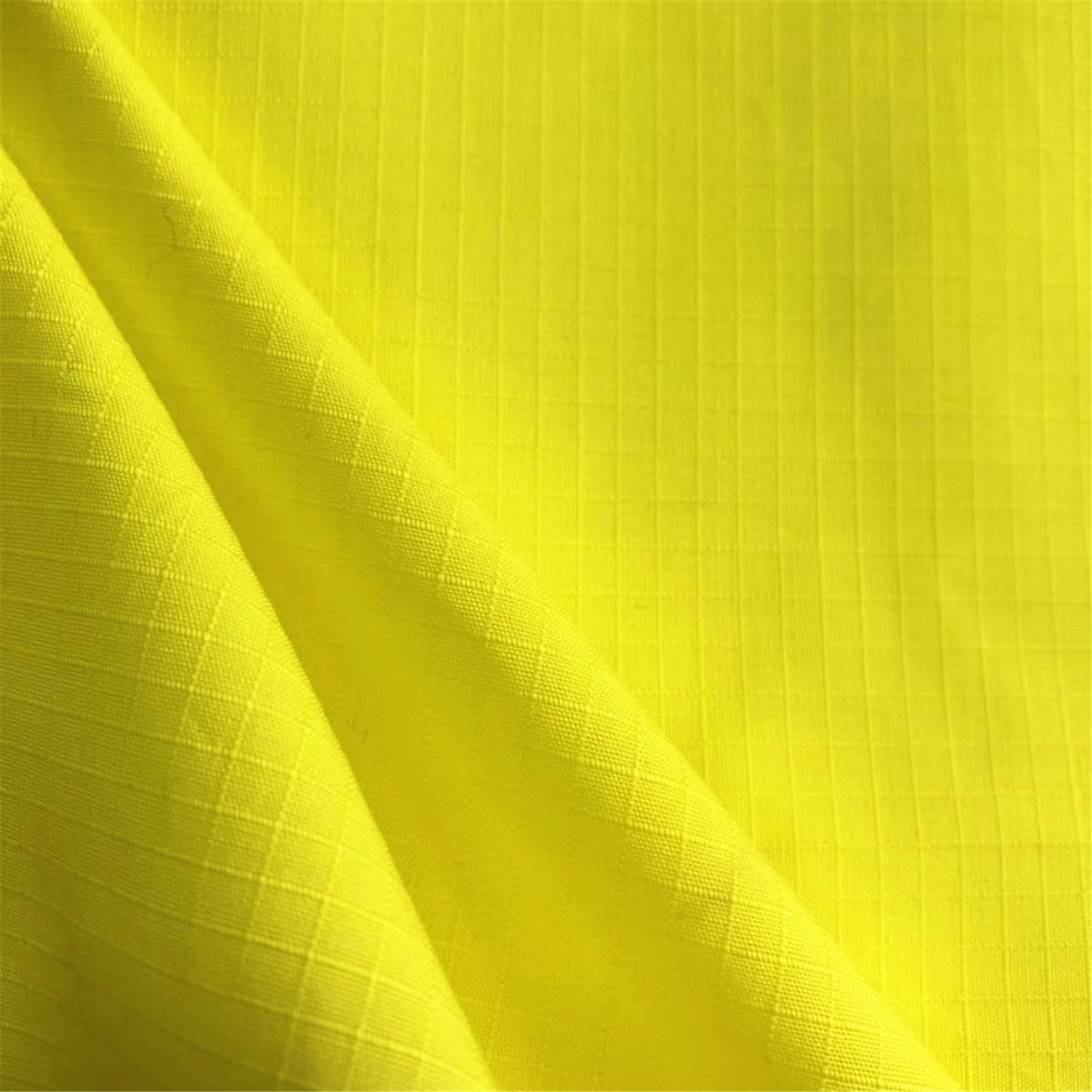
COTTON155
100% Cotton Ripstop HiVis — 155 gsm
100% Cotton · Ripstop weave
UPF50+ · Mercerised · Pre-shrunk · 150 cm

RP240
Poly-Cotton Ripstop Waterproof — 240 gsm
65% Polyester / 35% Cotton · Ripstop
Waterproof finish · Sanfor · 150 cm
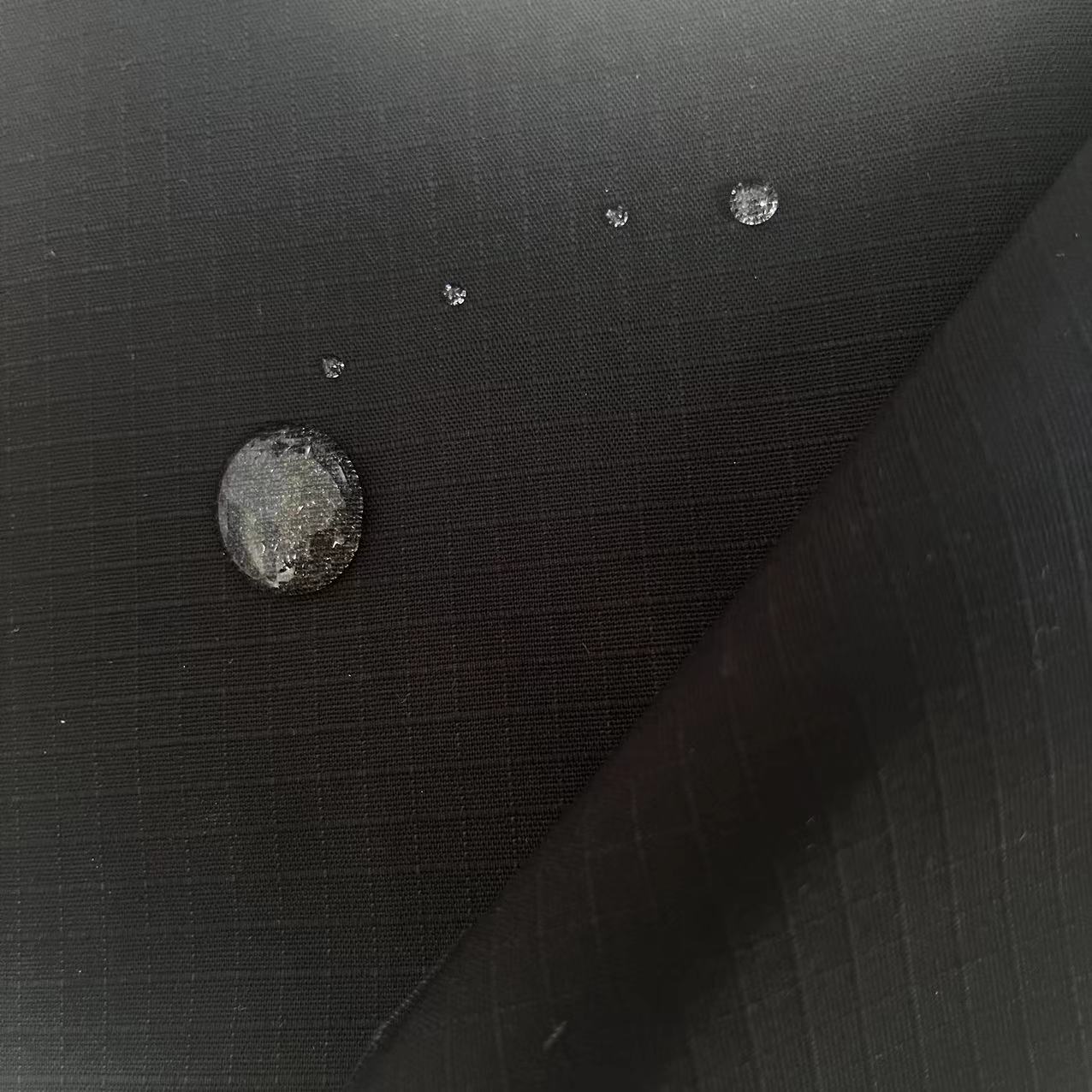
TCS235
T/C Stretch Ripstop PFC-Free WR — 235 gsm
65% Polyester / 32% Cotton / 3% Spandex
Ripstop · Fluoride-free WR · Wrinkle-free · 95°C wash · 150 cm

NC235
Nylon-Cotton IRR Waterproof Ripstop — 235 gsm
65% Nylon / 35% Cotton · Ripstop
IRR + Water repellent · 150 cm
Frequently asked questions
What is the most common ripstop blend used in workwear?
Poly-cotton ripstop — typically 65% polyester / 35% cotton — is the most widely used blend in professional workwear programmes globally. It balances durability, colour retention, and easy-care performance at a competitive price point.
Is ripstop fabric suitable for industrial laundering?
Standard ripstop can be industrially washed, but performance varies by construction. For programmes requiring repeated high-temperature washing (75°C+) or chlorine bleach, look for constructions specifically tested under EN ISO 15797 or with confirmed wash durability data. Always request wash test results before committing to bulk production.
What gsm should I choose for work trousers?
For work trousers, 180–240 gsm is the most common range. Lighter weights (155–180 gsm) suit warm climates or layered systems; heavier weights (220–260 gsm) suit outdoor, high-abrasion, or waterproof applications. If stretch is also required, the 220–240 gsm stretch ripstop range is a strong starting point.
Can ripstop fabric be finished with PFC-free water repellency?
Yes. PFC-free (fluoride-free) water-repellent finishes are available across poly-cotton ripstop constructions. These comply with bluesign® and OEKO-TEX® standards and are increasingly required by European brands due to PFAS regulatory pressure. Performance is comparable to traditional DWR finishes in most workwear applications.
Can ripstop fabric be customised in colour and finish?
Yes. Ripstop is available in a wide range of piece-dyed colours. Functional finishes such as WR, Teflon, soil release, UPF, or flame retardant can be applied depending on end-use requirements. Custom weights, blends, and constructions are available with minimum order quantities from 5,000 metres per colour.
What is the minimum order quantity for ripstop fabric?
MOQ is generally 5,000 metres per colour for standard in-stock constructions. For custom-woven or custom-finished constructions, MOQ may be higher. Send us your target weight, blend, and application and we will confirm availability and sampling options.
Related articles
Looking for ripstop fabric for your workwear programme? Send us your target garment type, weight, and performance requirements — we will get back to you with the right options and arrange samples.
✉ Email us now