Industrial Washable Fabrics for Uniforms and Workwear
Not all fabrics survive the laundry. In professional uniform programmes — where garments are washed dozens or hundreds of times under industrial conditions — fabric choice directly affects how long a uniform lasts, how it looks, and whether it still performs after a year of heavy use. This guide explains what industrial washability really means and how to choose the right fabric for your programme.
Key topics
1. What does "industrial washable" actually mean?
Industrial washing is not the same as regular machine washing. It uses commercial tunnel washers or batch washers with stronger detergents, higher mechanical action, and elevated temperatures — repeated 50 times or more over the life of a garment. Wash temperatures vary by market and sector: European programmes typically run at 60–75°C, while some healthcare and hygiene-critical applications require up to 95°C. US programmes often use 60°C or lower. A fabric described as "industrial washable" should maintain its colour, structure, and performance throughout — at the specific temperature and chemical conditions your programme uses.
2. EN ISO 15797 — the standard that matters
EN ISO 15797 is the European standard for industrial laundering of workwear. It defines test methods for shrinkage, colour fastness, and appearance retention after repeated industrial washing. When sourcing fabric for uniform programmes in Europe, this certification is an important benchmark. Always ask your supplier to provide test data at the wash temperature your programme actually uses — a fabric tested at 60°C may not perform the same at 75°C or 95°C.
3. Chlorine bleach resistance
In medical, food service, and hospitality uniforms, chlorine bleach is commonly used for hygiene. Most standard fabrics fade or degrade quickly under repeated bleach washing. Chlorine-resistant fabrics are specifically constructed to withstand this — through fibre selection, dye type, and finishing — without significant colour loss or fibre damage. This is an essential requirement for healthcare, food processing, and high-hygiene sectors. Some fabrics are engineered to pass both high-temperature industrial wash and chlorine bleach resistance simultaneously.
4. What happens to stretch fabrics after industrial washing?
Stretch fabrics require extra attention in industrial laundry programmes. Standard spandex (elastane) degrades faster under high heat and repeated washing — the elastic fibre breaks down, causing permanent stretch loss and dimensional distortion. For stretch uniforms in rental or repeat-wash programmes, the construction choice matters as much as the base fabric. Better options include mechanical stretch fabrics (stretch built into the weave structure rather than added elastic yarn), or fabrics using industrial-wash-durable stretch fibres such as Sorona® (bio-based, good elastic recovery after repeated washing), XLA (crosslinked polyolefin, heat-stable), or PBT (polybutylene terephthalate, resistant to high-temperature washing). Each of these offers better durability than standard spandex in demanding laundry conditions.
5. Choosing fabric by industry
Different industries have different laundering demands. Healthcare requires chlorine bleach resistance and high-temperature washability (often 75–95°C). Food service prioritises soil release and colour retention under frequent washing. Industrial and manufacturing workwear needs dimensional stability and durability. Hospitality programmes typically run at 60–75°C with standard detergents. The right fabric depends on your specific wash cycle, temperature, and chemical requirements — not just a generic "industrial washable" claim.
Industrial washable — combined with special functions
Industrial washability can be combined with a range of functional finishes to meet the specific requirements of different sectors. All combinations below are tested to ISO 15797.
EME · Spandex · EOL · PBT · Sorona® · Mechanical stretch
- EOL / PBT: elongation 10–14%
- Sorona® / EME / Spandex: elongation 14–24%
- Washing method: ISO 15797
Teflon · Rudolf · 3M finishes
- Water / oil / soil repellency
- Standards: FZ/T 14021-2021, AATCC 22-2001, AATCC 118-2002, AATCC 130-2000, GB 12799
- Washing method: ISO 15797
Aramid · FR modacrylic · FR viscose · FR nylon · FR polyester · Suplon
- Standards: NFPA 2112, ASTMF 1959, EN 11612, ASTMD 6413
- Washing method: ISO 15797
Fluorine-free finish · PFOA / PFOS / fluoride-free
- Durable up to 30 wash cycles
- Upgraded fluorine-free formula
- Standards: AATCC 130, GB/T 28895
- Washing method: ISO 15797
Conductive fibre construction
- Point-to-point resistance: 1×10⁵ – 1×10⁹ Ω
- Standards: EN 1149-1, EN 1149-3, EN 1149-5, GB 12014
- Washing method: ISO 15797
Silver ion · Zinc oxide · Quaternary ammonium
- Antibacterial rate after 50 washes: ≥99.9% (ASTM E 2149-20)
- Antiviral activity after 50 washes: ≥99.82% (ISO 18184)
- Washing method: ISO 3759, ISO 5077, ISO 6330
Not all combinations are available in all fabric constructions. Contact us with your specific requirement and we will confirm what is achievable.
Our industrial washable fabric range
In-stock constructions tested for industrial laundry performance. Click any card for full specs, or use the form below to request the complete catalogue.
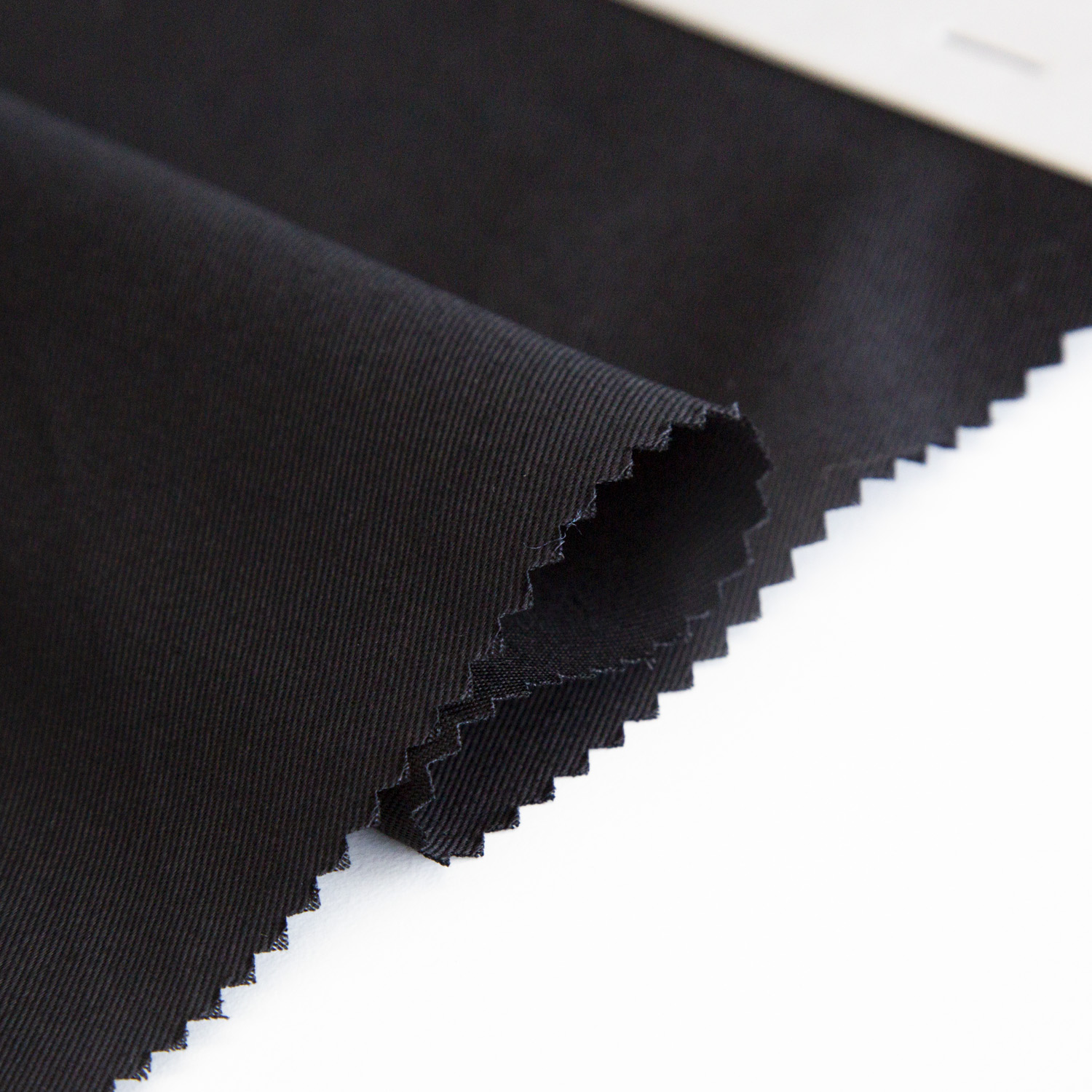
TC200
Poly-Cotton Industrial Wash Twill — 200 gsm
65% Polyester / 35% Cotton · Twill
Sanfor · Tested 75°C ISO 5077 · 150 cm
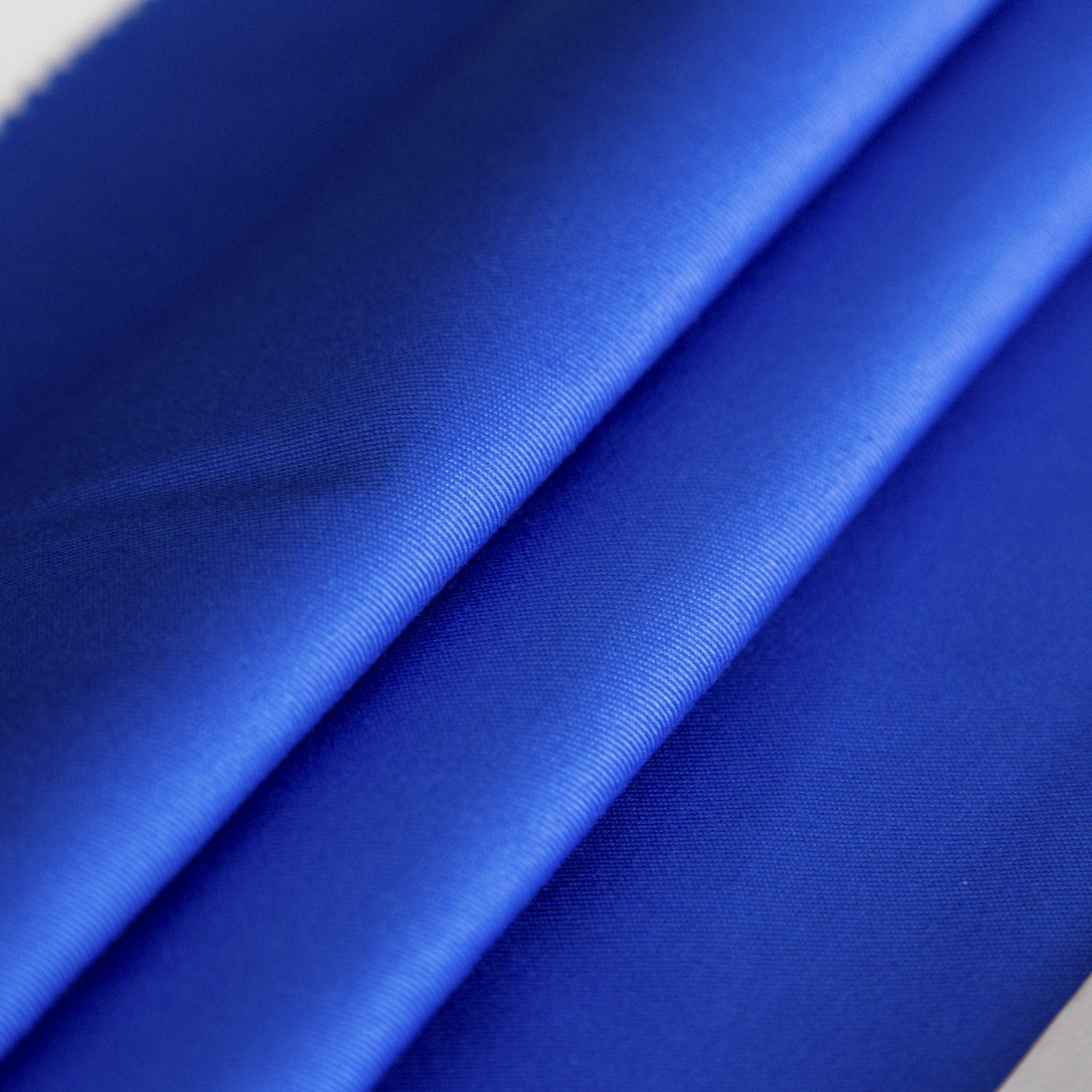
KG308
Poly-Cotton Industrial Wash Twill — 245 gsm
65% Polyester / 35% Cotton · 2/1 Twill
Sanfor · Tested 75°C ISO 5077 · 150 cm
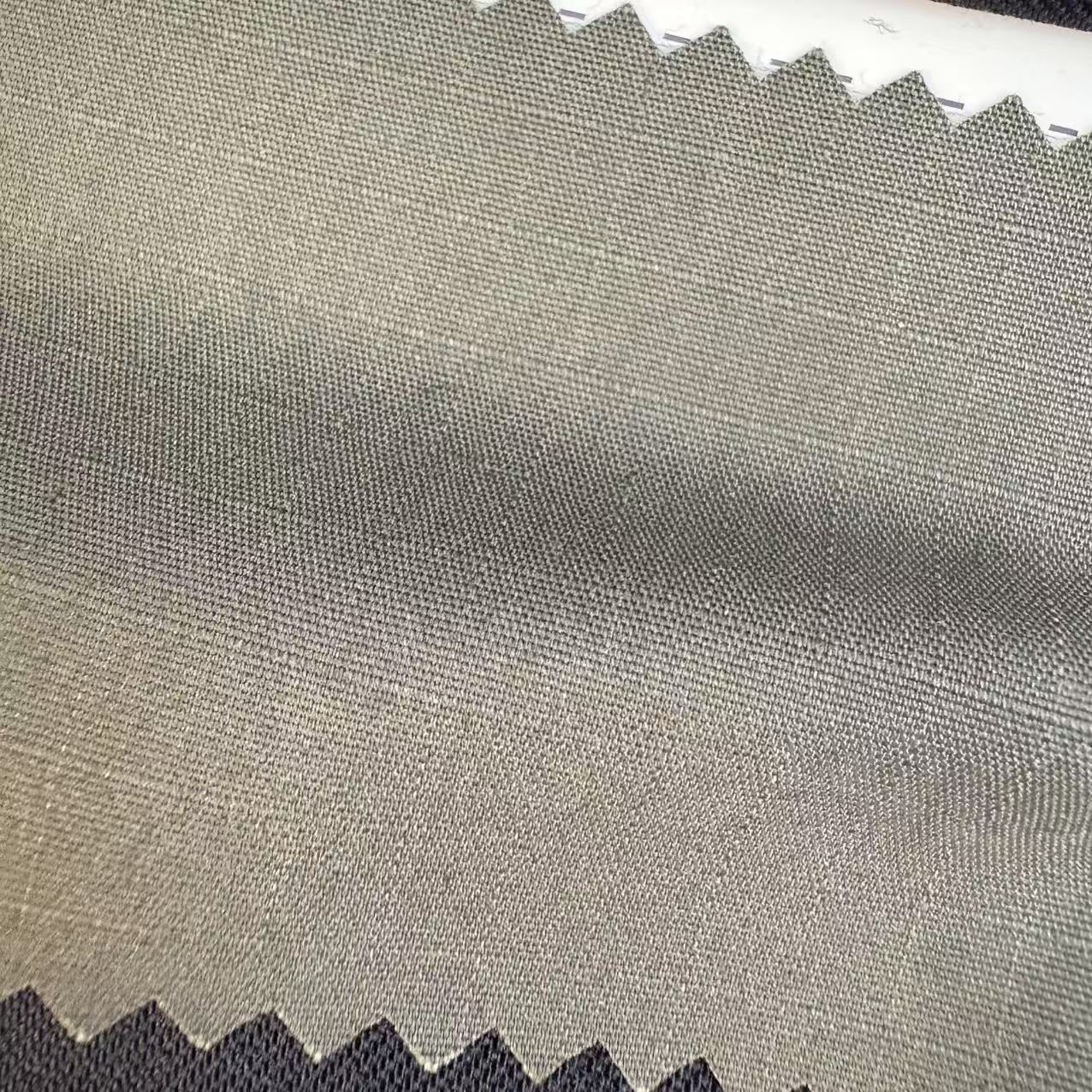
25244
Sorona® Stretch Ripstop — 165 gsm
39% Polyester / 21% Combed Cotton / 40% Sorona®
Ripstop 2×2 · Moisture wicking · Easy care · 142 cm
Frequently asked questions
What does 50-cycle wash resistance mean?
A fabric rated for 50 wash cycles has been tested to maintain acceptable appearance, colour, and dimensional stability after 50 industrial washes. This is a common benchmark for rental uniform programmes where garments are washed weekly over one to two years.
What wash temperature should I specify for my programme?
It depends on your market and sector. European rental programmes typically use 60–75°C; healthcare and hygiene-critical sectors often require 75–95°C to meet disinfection standards. US programmes commonly use 60°C or lower. Always specify your actual wash temperature when requesting test data — a fabric rated at 60°C may not perform the same at 75°C.
Is poly-cotton suitable for industrial laundering?
Yes. Poly-cotton blends (typically 65/35) are the most widely used constructions in industrial washable uniforms. The polyester component helps retain shape and resist shrinkage; cotton provides comfort. Performance varies significantly by construction and finish, so always verify with supplier wash test data at your target temperature.
Can industrial washable fabrics also be chlorine bleach resistant?
Yes. Some fabrics are specifically engineered to meet both requirements — surviving high-temperature industrial washing and repeated chlorine bleach exposure. This combination is particularly important for healthcare and food industry uniforms. Ask for test data covering both conditions.
Which stretch fabrics survive industrial washing?
Standard spandex performs poorly under high-temperature repeated washing — the elastic fibre degrades and the garment loses shape. Better options for wash-durable stretch include mechanical stretch constructions (no elastic fibre added), or fabrics using Sorona®, XLA, or PBT stretch fibres, which offer significantly better durability in industrial laundry conditions.
What should I check before ordering fabric for a rental uniform programme?
Ask your supplier for wash test data at your target temperature (ideally EN ISO 15797 methodology), confirm colour fastness ratings after repeated washing, check shrinkage data in both warp and weft directions, and request a sample that has been through at least 20 industrial wash cycles before approving bulk production.
What is the minimum order quantity for industrial washable fabric?
MOQ is generally 5,000 metres per colour for standard in-stock constructions. Contact us with your wash temperature requirements, end-use industry, and target quantity — we will confirm what is available and arrange sampling.
Related articles
Sourcing fabric for a uniform or rental programme? Send us an email with your wash requirements, industry, and target quantity — we will match you with the right fabric and arrange a sample.
✉ Email us now