
Sustainable Workwear Fabrics
Sustainability requirements are now standard in European and North American workwear procurement. This page explains what Prance can supply — the fibres, certifications, functional finishes, and brand labels available — and what procurement teams should know when building a sustainable fabric specification.
Certifications and documentation we hold
GRS and OCS — and what they mean for your order
Prance holds GRS (Global Recycled Standard) and OCS (Organic Content Standard) certifications. This means we can issue Transaction Certificates (TCs) for eligible orders — the documents your brand needs to make verified recycled or organic content claims to your own customers or auditors. Not every fabric supplier in China is certified to issue TCs; we are, and we do it as a standard part of the order process for qualifying products.
Sustainable fibre and material range
We work with the following sustainable fibres and materials across our workwear fabric range. Most can be combined with functional finishes; see the section below.
Recycled polyester
From post-consumer bottles or textile waste. GRS certifiable. Most widely used sustainable base fibre in workwear.
Organic cotton
Grown without synthetic pesticides. OCS certifiable. Available in blends with recycled polyester.
Lyocell (Tencel™)
Wood-pulp derived, closed-loop production. Soft hand feel, moisture management, biodegradable.
Bamboo fibre
Natural antibacterial properties, moisture wicking. Available with anti-static combinations.
Viscose
Plant-derived cellulosic fibre. Soft, breathable. Available 170–300 gsm in poly/viscose blends.
Biodegradable fibre
CICLO® biodegradable technology available. Certified to break down in landfill conditions.
Recycled nylon
From post-industrial nylon waste. GRS certifiable. Used in nylon-cotton ripstop constructions.
Fluorine-free WR / SR
No PFOA, PFOS, or other fluorine compounds. Fluorine-free water repellent, soil release, and vegetable oil repellent options available.
Brand labels and hang tags we can supply
Branded fibre labels add credibility to your garment and communicate sustainability credentials to end users at point of sale. We work with the following licensed brands and can arrange the relevant documentation for qualifying orders.
REPREVE®
Recycled PET from Unifi. Widely recognised by European and US brands.
CICLO®
Biodegradable technology. Certified to break down in anaerobic landfill conditions.
37.5®
Thermo-hygro balancing technology. Temperature and moisture regulation.
TENCEL™ Lyocell
Lenzing's certified lyocell fibre. Closed-loop, biodegradable.
EcoCosy®
Certified cotton fibre brand. Traceability from farm to fabric.
Bamboo fibre label
Natural bamboo fibre with antibacterial and moisture-wicking credentials.
Bionic Finish Eco®
Bio-inspired fluorine-free WR finish. No PFAS, no compromise on repellency.
Integr8®
Stretch + industrial washable. For programmes requiring both durability and movement.
What to specify when sourcing sustainable workwear fabric
Recycled content — percentage and certification level
GRS certification applies when recycled content is 20% or above; the Recycled Claim Standard (RCS) applies at 5–100%. When specifying, confirm the exact recycled percentage, which GRS scope certificates cover the supply chain, and whether you need a Transaction Certificate for each shipment. We can advise on what is achievable for a given construction.
Fluorine-free water repellent finish
For brands sourcing into European markets, moving to a fluorine-free (PFAS-free) water repellent finish is increasingly a requirement rather than an option. We offer fluorine-free WR as a standard finish on most poly-cotton and recycled poly-cotton constructions — performance is comparable to conventional DWR for water repellency in typical workwear applications, with no PFOA, PFOS, or other fluorine compounds.
Performance and wash durability — sustainable fibres do not mean a compromise
Recycled polyester and organic cotton perform the same as their conventional equivalents in terms of colour fastness, shrinkage, and wash durability — for the vast majority of workwear applications, there is no trade-off. The one exception worth noting is whiteness: if your programme requires very bright or optical-white fabric, recycled polyester may not reach the same white level as virgin polyester due to the nature of the recycled raw material. For all other colours and constructions, sustainable fibre content simply does not affect performance. Always verify with wash test data at your target temperature, and request a pre-production sample before bulk approval.
Sample constructions from our sustainable range
We do not hold inventory on sustainable fabrics. Every order is made-to-order — raw materials are sourced fresh for each production run so that Transaction Certificates remain valid and traceable for your specific order. The constructions below are examples of what we have developed for previous clients. Our full range is much broader, covering the following fibre categories:
Recycled polyester / organic cotton blends · Lyocell (TENCEL™) · Bamboo fibre · Viscose blends · Biodegradable (CICLO®) · Recycled nylon · Fluorine-free WR constructions · Stretch + sustainable combinations

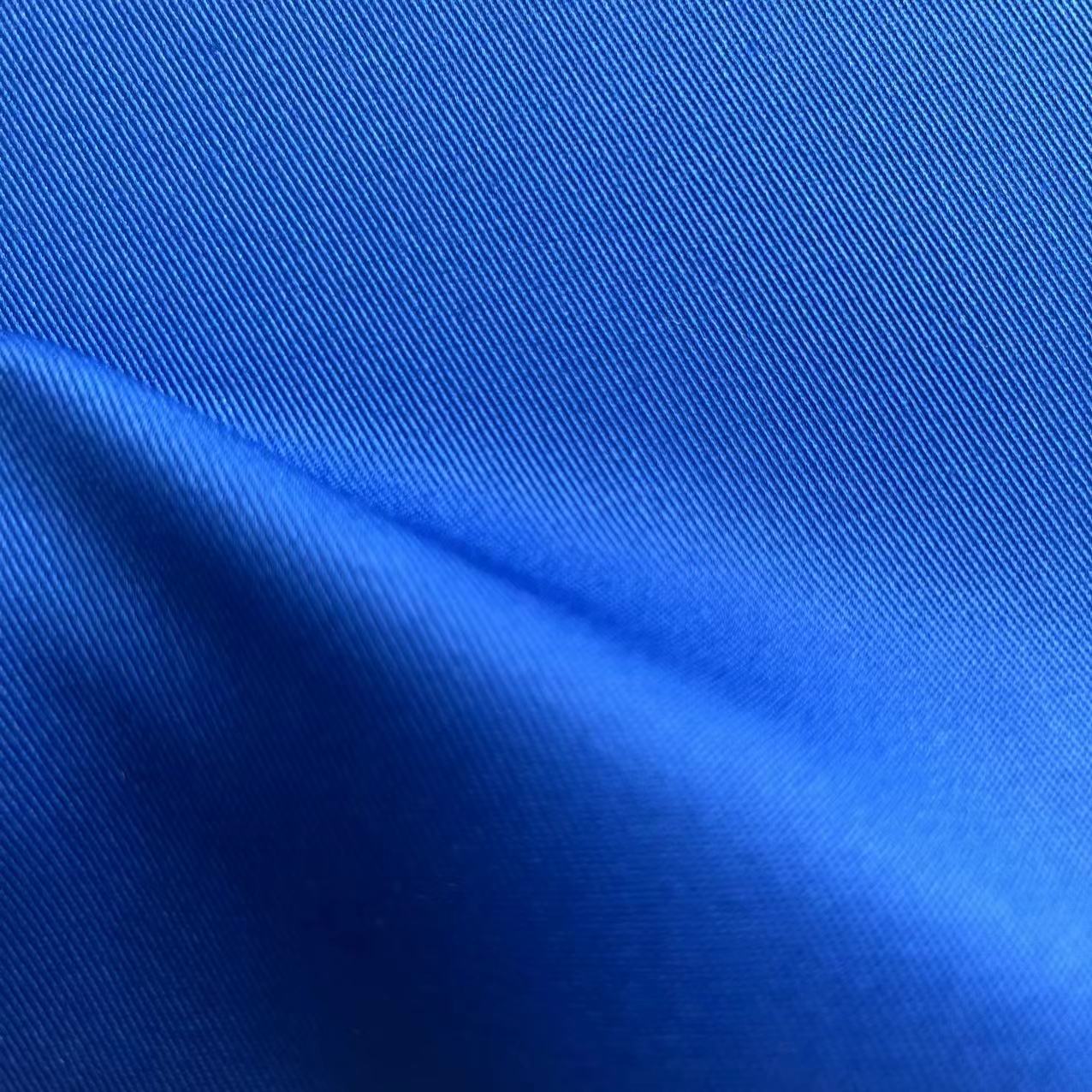
Example — Recycled poly / organic cotton
Recycled Poly / Organic Cotton Stretch — 220 gsm
65% Recycled Polyester / 32% Organic Cotton / 3% Spandex
2/1 Twill · Sanfor · 150 cm
Example — Recycled poly / organic cotton + XLA
Recycled / Organic Cotton XLA Stretch — 260 gsm
62% Recycled Polyester / 35% Organic Cotton / 3% Spandex XLA
Twill · Industrial laundry · Chlorine bleach resistant
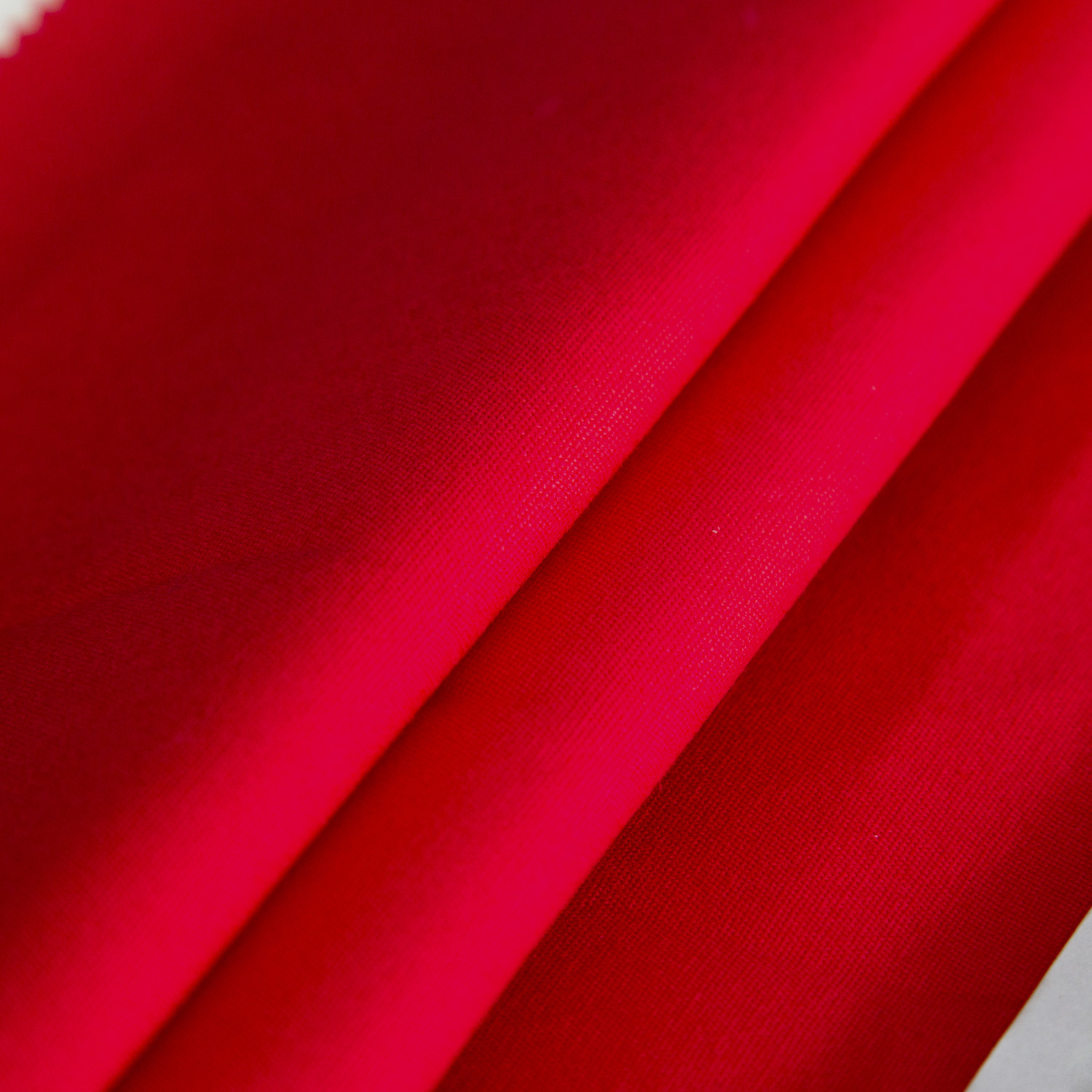
Example — Recycled poly / organic cotton canvas
Recycled Poly / Organic Cotton Canvas — 250 gsm
65% Recycled Polyester / 35% Organic Cotton
Canvas · 150 cm
Frequently asked questions
Can you provide Transaction Certificates for recycled or organic content?
Yes. Prance holds GRS and OCS scope certificates and can issue Transaction Certificates (TCs) for qualifying orders. TCs are the documents your brand or auditor needs to verify recycled or organic content claims in your supply chain. We issue these as a standard part of the order process for eligible products — no additional setup required.
Is recycled polyester as durable as virgin polyester for industrial workwear?
In most workwear constructions, yes. Recycled polyester has comparable tensile strength, abrasion resistance, and wash durability to virgin polyester. Performance differences are minimal for standard poly-cotton workwear. The one practical limitation is colour consistency on very bright whites — virgin polyester gives a cleaner result for bright-white programmes.
What is fluorine-free water repellent and why does it matter?
Fluorine-free (PFAS-free) WR finish provides water repellency without PFOA, PFOS, or other persistent fluorine compounds. For brands selling into European markets, this is increasingly a procurement requirement as EU regulation on PFAS tightens. Performance for water repellency is comparable to conventional DWR finishes in standard workwear applications. We offer it as a standard option on most poly-cotton and recycled poly-cotton constructions.
Which brand labels can be attached to garments made from your fabrics?
Depending on the construction and fibre content, eligible garments can carry REPREVE®, CICLO®, 37.5®, TENCEL™ Lyocell, EcoCosy®, Bamboo fibre, and Bionic Finish Eco® labels. Each brand label requires fibre sourcing from licensed suppliers and documentation. We advise on eligibility during the development process.
Can sustainable fabrics meet industrial laundry requirements?
Yes. Recycled polyester blends can be engineered to meet EN ISO 15797 industrial laundering standards. Sustainable fibre content does not automatically guarantee wash performance — specify your wash temperature and frequency and we will confirm which constructions are suitable and provide test data.
What is the minimum order quantity for sustainable fabric?
Standard MOQ is 10,000 metres, which can be split across 2–3 colours. Because every sustainable fabric order is made-to-order with certified raw materials, lower quantities make the TC documentation and raw material procurement less cost-effective. That said, trial orders can be discussed — if you are developing a new programme and need a smaller initial run to validate the construction, get in touch and we will see what is workable.
Related articles
Looking for sustainable fabric for your workwear programme — with certification documentation included? Send us your fibre preference, performance requirements, and target quantity and we will get back to you with options and samples.
✉ Email us now