
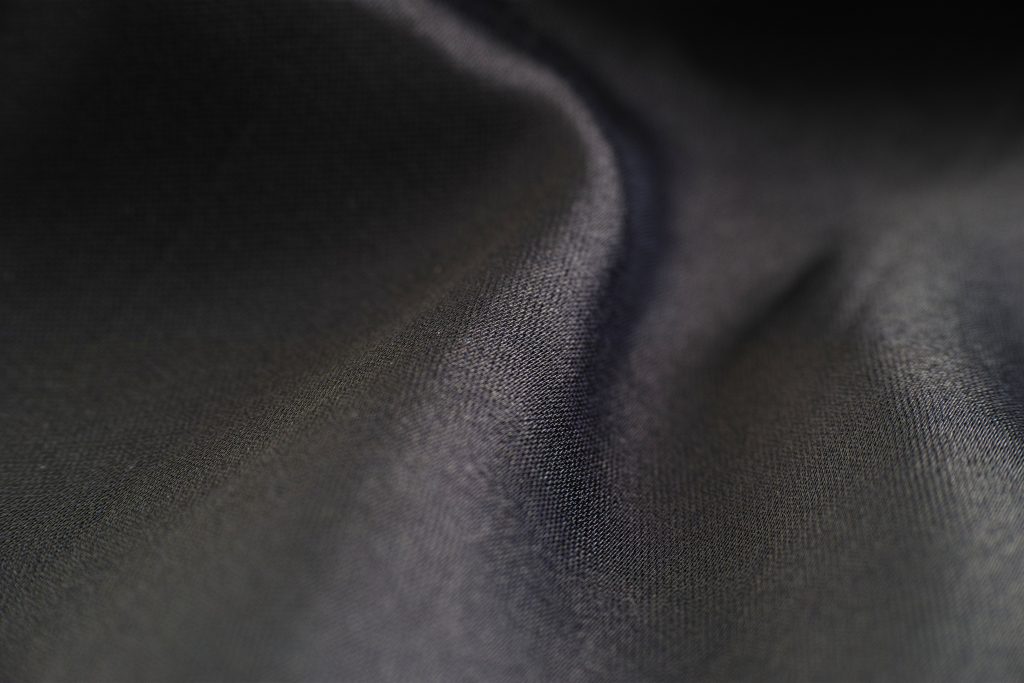
Mechanical stretch fabrics achieve their stretch through yarn structure and weave construction — not elastic fibers. For workwear applications, this translates to better durability, stable performance through industrial wash cycles, and no risk of fiber degradation over time. The trade-off is a more modest stretch range compared to spandex or T400 blends, which makes mechanical stretch the right choice for garments where freedom of movement matters more than high-stretch recovery.
When workwear brands and procurement teams compare stretch options, the conversation typically centers on spandex, T400, or EME fiber blends. Mechanical stretch tends to be underestimated — partly because the stretch range is lower, and partly because “no elastic fiber” sounds like a limitation rather than a feature. In practice, for many uniform and workwear applications, the absence of elastic fiber is precisely the point.
This article explains how mechanical stretch works, which fiber combinations support it, how it compares to elastic-fiber stretch in workwear-relevant performance categories, and where it makes the most sense.
How Mechanical Stretch Works
Stretch in a woven fabric can come from two sources: elastic fiber content (spandex, T400, Sorona, EME, etc.) or from the geometry of the fabric’s construction itself. Mechanical stretch relies entirely on the latter.
The main mechanisms are:
- Yarn twist and crimp — high-twist yarns store energy and allow the structure to extend and recover without elastic fiber.
- Weave structure — certain twill and satin constructions allow threads to shift under load, creating give in the fabric plane.
- Yarn interlacing angle — looser interlacing at specific points allows controlled extension before the weave tightens under load.
The result is a fabric that stretches — typically 10–18% in one or both directions — and recovers without any elastic fiber component.
Which Fiber Types Support Mechanical Stretch?
A common misconception is that mechanical stretch requires a specific fiber type. It does not — the stretch comes from construction, not composition. In practice, the fabrics we produce with mechanical stretch are:
- 100% cotton — high-twist cotton yarn in an appropriate weave structure delivers meaningful stretch with all the comfort and breathability benefits of pure cotton. Compatible with chlorine bleach, relevant for EN ISO 15797 industrial wash protocols.
- Poly-cotton blends (T/C) — typically 65/35 or 80/20 polyester/cotton. The addition of polyester improves dimensional stability, abrasion resistance, and dry speed, while the mechanical construction handles the stretch. Our TC mechanical stretch fabrics pass repeated industrial wash cycles without stretch performance loss.
Nylon-cotton and other blends are possible in principle, but for workwear uniforms, cotton and poly-cotton are the relevant base compositions for this construction method.
Both our 100% cotton and poly-cotton mechanical stretch fabrics are produced without any elastic fiber. This matters for buyers whose garments go through industrial laundry programs — there is no spandex content to declare, no separate care instruction for elastic components, and no fiber degradation pathway tied to heat or bleach exposure.
Durability and Shape Retention: The Core Advantage
Elastic fibers — whether spandex, EME, T400, or Sorona — degrade. The degradation mechanisms differ by fiber type (spandex is highly vulnerable to chlorine bleach; T400 holds up better but adds cost; EME varies by grade), but they share a common property: over time and wash cycles, stretch performance decreases and fabric shape can distort.
Mechanical stretch has no elastic fiber to degrade. The fabric’s stretch performance is a function of its weave and yarn construction, both of which are inherently stable through washing, heat, and chemical exposure. Shape retention over the garment’s service life is consequently more predictable.
For workwear procurement teams buying at volume for multi-year uniform programs, this translates to a more consistent garment across the service life — less variation in fit between a new garment and one that has gone through 80 industrial wash cycles.
Industrial Wash Performance
Industrial laundry programs are harsher than domestic washing in three ways: higher temperatures (up to 75°C tunnel wash), more aggressive chemistry (including chlorine bleach for white/light garments), and mechanical action in tumble drying.
Mechanical stretch fabrics — particularly poly-cotton constructions — handle all three without the vulnerabilities that come with elastic fiber content:
- No chlorine sensitivity — cotton and polyester are both bleach-compatible. There is no spandex content to be degraded by oxidative bleach agents.
- No heat-related elastic fatigue — the stretch mechanism is structural, not fiber-based, so tunnel wash temperatures do not affect stretch performance.
- Stable dimensional performance across cycles — consistent with ISO 30023 and EN ISO 15797 wash durability requirements relevant for rental and industrial laundry programs.
The Trade-Off: Stretch Range
Mechanical stretch provides meaningful freedom of movement — typically 10–18% extension — but this is lower than spandex blends (which typically achieve 25–40%+ stretch) or T400 fabrics. For workwear applications like cargo pants, jackets, coveralls, and shirts, this range is generally sufficient. For garments that require high-stretch recovery — close-fit activewear, garments with articulated knee or elbow panels — elastic fiber stretch is likely the better specification.
This is not a flaw in mechanical stretch fabrics — it is a deliberate trade-off. If your application requires industrial wash compatibility and long service life over maximum stretch, mechanical stretch delivers more value. If maximum stretch range is the priority and industrial wash exposure is limited, an elastic fiber construction may be appropriate.
Comparison: Mechanical Stretch vs. Elastic Fiber Stretch for Workwear
| Property | Mechanical Stretch | Spandex Blend | T400 / EME Blend |
|---|---|---|---|
| Stretch range (woven) | 10–18% | 25–40%+ | 15–30% |
| Chlorine bleach resistance | Good (cotton/TC) | Poor (spandex degrades) | Good |
| Industrial wash durability | High | Moderate | High |
| Shape retention over service life | Stable | Degrades with wash cycles | Stable |
| Heat resistance (tunnel wash) | Good | Poor at high temps | Good |
| Fabric composition | Cotton or T/C only | Requires elastic fiber content | Requires T400/EME fiber |
| Typical cost position | Lower | Moderate | Higher |
| Best fit | Industrial laundry, long service life uniforms | High-stretch activewear, short service life | Performance workwear, moderate wash programs |
Typical Workwear Applications
Mechanical stretch fabrics are well-suited to garments where durability and laundry compatibility are prioritized over maximum stretch range:
- Work trousers and cargo pants (freedom of movement without high-stretch construction)
- Uniform jackets and shirts in industrial laundry programs
- Coveralls and protective garments where bleach-wash programs are standard
- Garments specifying EN ISO 15797 or ISO 30023 wash durability
- Rental workwear programs with multi-year service life requirements
FAQ
Does mechanical stretch fabric contain any spandex or elastic fiber?
No. Mechanical stretch fabrics achieve their stretch entirely through yarn construction and weave geometry — no spandex, elastane, T400, or EME fiber is used. This is one of the main reasons they perform well in industrial wash programs that use chlorine bleach or high temperatures.
What fiber compositions are available in mechanical stretch?
We produce mechanical stretch fabrics in 100% cotton and poly-cotton blends (typically 65/35 or 80/20 polyester/cotton). Both compositions are produced without elastic fiber. The poly-cotton version offers higher abrasion resistance and faster dry times; the 100% cotton version is preferred where pure natural fiber content is required.
How much stretch does a mechanical stretch fabric have?
Typically 10–18% in the stretch direction, depending on weave construction and yarn specification. This is lower than spandex blends but sufficient for most workwear mobility requirements. If your application requires higher stretch — above 20–25% — a T400 or EME blend may be more appropriate.
Will mechanical stretch fabric lose elasticity after repeated industrial washing?
No. Because the stretch comes from fabric structure rather than elastic fiber, there is no fiber degradation pathway. Stretch performance remains stable across repeated wash cycles, including high-temperature and bleach-based industrial laundry programs.
Is mechanical stretch suitable for chlorine bleach wash programs?
Yes, for cotton and poly-cotton constructions. Both cotton and polyester are compatible with chlorine bleach. Unlike spandex-containing fabrics, there is no elastic fiber content to be degraded by oxidative bleach agents.
When should I choose elastic fiber stretch over mechanical stretch?
If your garment requires a stretch range above 20–25%, close-fit construction, or high-stretch recovery (e.g. articulated knees in tactical pants, form-fitting base layers), an elastic fiber construction — T400, EME, or spandex — will likely be a better specification. Mechanical stretch is optimized for durability and industrial wash compatibility, not maximum stretch range.
📖 Looking for a complete overview? Read our guide: Stretch Workwear Fabrics