

Chlorine bleach resistant fabric for medical use is fabric engineered to maintain colour, structure, and performance after repeated washing with sodium hypochlorite disinfectants — the standard sterilisation chemistry in hospitals, care facilities, and clinical laundries. The resistance is built into the dyeing and finishing process, not applied as a topical coating, which means it holds through 50 or more industrial wash cycles rather than degrading after 10–15. For procurement teams sourcing medical uniforms, surgical gowns, patient garments, or hospital bed linen, this is the specification that determines total garment lifespan — and total cost of ownership.
This article covers what makes a fabric genuinely chlorine bleach resistant, how to verify it, what fabric types are used in medical environments, and what to ask a chlorine bleach resistance fabric manufacturer or factory before placing an order.
Why chlorine bleach resistance matters in medical fabric sourcing
In clinical laundry operations, sodium hypochlorite (bleach) concentrations of 1000–2000 ppm are standard for disinfection. At those concentrations, bleach is highly effective at killing pathogens — and highly destructive to fabric that was not specified for it. The chemical attack is specific: chlorine oxidises the bond between reactive dyes and cotton fibres, causing colour breakdown that presents as fading, uneven “cloudy” patches, or yellowing. The damage is not gradual — it accelerates with each cycle once the dye-fibre bond is compromised.
The business consequence is straightforward. Medical uniforms and patient garments that fade or degrade visually after 15–20 washes create replacement costs, quality complaints from end users, and — in environments where appearance signals hygiene — reputational issues for the facilities wearing them. A fabric built for chlorine resistance at 2000 ppm, validated to AATCC 188 Grade 3–4 colorfastness, removes that problem at the source.
The most common sourcing mistake we see is buyers asking for “bleach-resistant” fabric without specifying the bleach concentration or the number of wash cycles required. A fabric that passes 500 ppm for 20 washes is not the same as one validated at 2000 ppm for 50 industrial cycles. Those two claims describe completely different products. Always ask for the test method and the concentration — AATCC 188 at 2000 ppm, 50 cycles ISO 15797, is the benchmark we work to for medical accounts.
How chlorine bleach resistance is built into fabric
Bleach resistance is not a surface finish — it is achieved through two integrated steps in fabric production:
1. Chlorine-resistant reactive dyes. Standard reactive dyes break down when their molecular bonds are attacked by active chlorine. Chlorine-resistant dye systems use modified molecular structures that are more stable under oxidative conditions. This is a deliberate dye selection decision — not all mills do it by default, and it cannot be added retroactively to a finished roll.
2. Chemical protection during finishing. After dyeing, a chemical treatment is applied that intercepts active chlorine ions before they can attack the dye-fibre bond. This acts as a buffer, significantly extending the number of bleach wash cycles the fabric can withstand before colour degradation becomes visible. At Prance, combining these two steps allows us to achieve Grade 3–4 (often Grade 4) colorfastness under AATCC 188-2010 at 2000 ppm bleach concentration — tested on both 100% cotton and T/C blends.
The combination of the right dye system and chemical finishing is also what enables industrial wash durability across 50+ cycles to ISO 15797 standards, not just resistance to a single bleach exposure.
What to look for in a chlorine bleach resistance fabric manufacturer
When evaluating a factory or manufacturer for chlorine bleach resistant medical fabric, these are the three performance criteria that matter most in practice:
Medical garments in active use go through hundreds of wash cycles over their service life. A fabric that holds its performance to 50 industrial cycles (ISO 15797) with consistent appearance and structural integrity reduces replacement frequency and total cost per wear. Ask for test data at cycle count — not just a general “industrial washable” claim.
The concentration standard for clinical disinfection is 1000–2000 ppm sodium hypochlorite. A fabric needs to be specifically validated at this level — not just “suitable for bleach washing.” Grade 4 colorfastness at 2000 ppm under AATCC 188 means the colour change after bleach exposure is negligible. Grade 3–4 is acceptable for most medical procurement requirements; anything below Grade 3 will show visible fading within 10–20 washes at clinical concentrations.
Medical garments are worn for long shifts and by patients who may have sensitive skin. The poly-cotton and full-cotton constructions used in chlorine-resistant medical fabric maintain breathability and soft hand feel. Additional function options — antibacterial, antistatic, anti-acid/alkali, wrinkle resistance — can be combined with bleach resistance for specific clinical environments. Weights from 110 gsm (light patient gowns) to 240 gsm (durable uniforms and bed linen) are available.
Medical applications: what this fabric is used for
Our chlorine bleach resistant medical fabrics are used across the full range of clinical textile applications:
| Application | Typical fabric | Key requirements |
|---|---|---|
| Surgical gowns & scrubs | 65/35 T/C, 150–210 gsm | Chlorine bleach resistance, antibacterial, high-temp washable |
| Medical / nursing uniforms | 65/35 T/C or T/C/antistatic, 190–230 gsm | Colour retention, 50× industrial wash, comfort, antistatic option |
| Patient garments (isolation gowns) | 65/35 T/C or 100% cotton, 110–160 gsm | Soft hand feel, antiviral/antibacterial, reusable wash durability |
| Hospital bed linen | 100% cotton or 60/40 T/C, 180–240 gsm | High-temp sterilisation, chlorine bleach resistance, anti-wrinkle |
| Lab coats & clinical workwear | 65/35 T/C, 190–230 gsm | Anti-acid/alkali, antibacterial, bleach resistance, easy care |
One specification detail that often gets overlooked for patient garments and isolation gowns: the antiviral finish. Chlorine bleach resistance and antibacterial function address different risks — bleach resistance protects the fabric from laundry chemistry, while antibacterial and antiviral finishes reduce pathogen transfer during use. For high-risk clinical environments, both are needed. Our poly-cotton blend isolation garment fabric combines antiviral performance with industrial wash durability, validated for reusable use rather than single-use disposal.
Our medical fabric range: compositions and functions
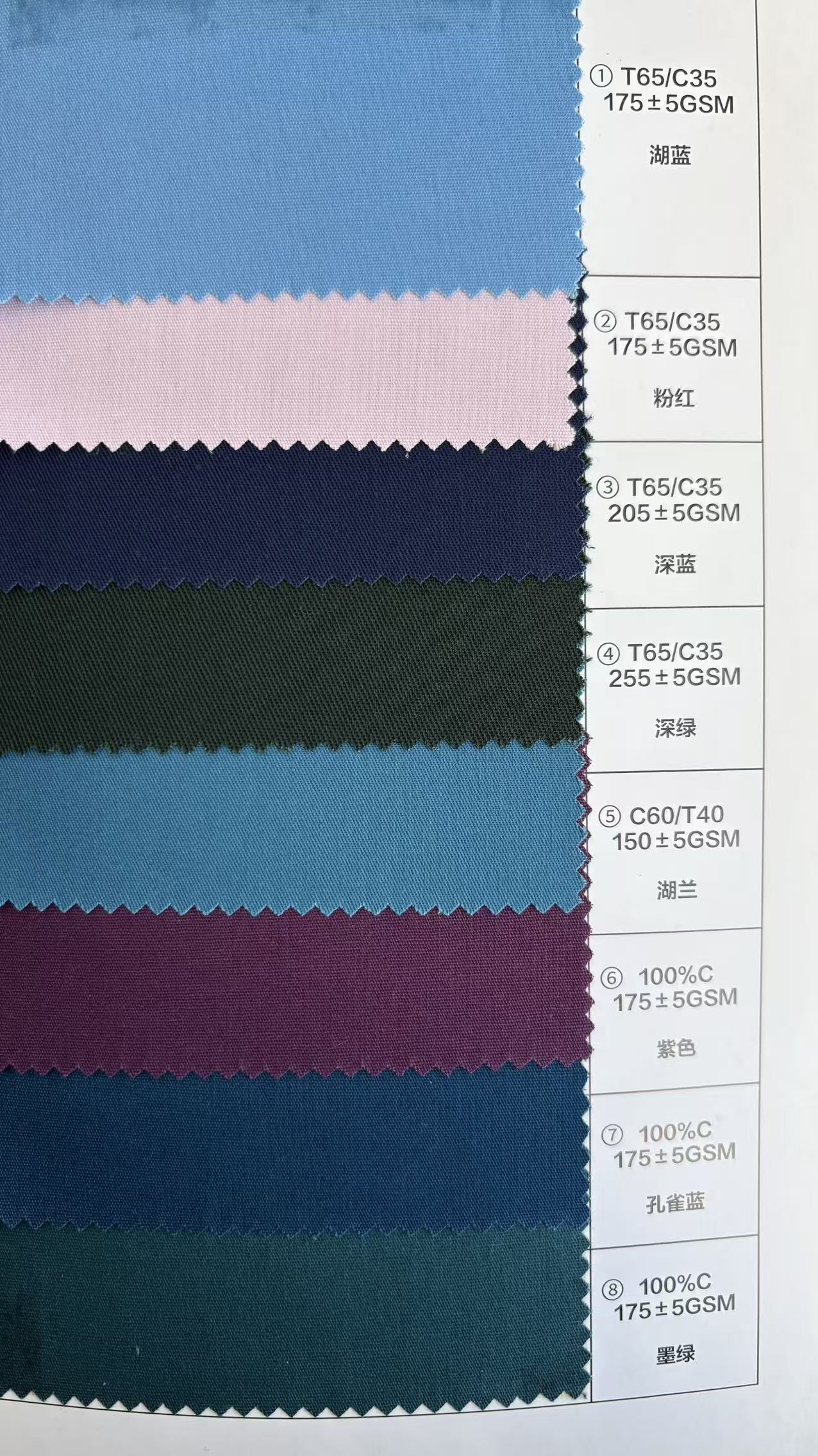
We supply chlorine bleach resistant medical fabrics in the following constructions. Full technical specifications and test data are available on request — email sales@ripstopfabric.com for the catalogue.
| Composition | Weight range | Available functions |
|---|---|---|
| 65% Polyester / 35% Cotton | 150–230 gsm | Chlorine bleach resistant, high-temp washable, antibacterial, antiviral, anti-wrinkle, high colour fastness |
| 100% Cotton | 110–240 gsm | Chlorine bleach resistant, sterilisation-safe, soft & skin-friendly, anti-wrinkle |
| Polyester / Cotton / Antistatic fibre | 180–220 gsm | Chlorine bleach resistant, antistatic (EN 1149), antibacterial, industrial washable |
Certifications and test standards to request
When qualifying a chlorine bleach resistance fabric factory or manufacturer, request documentation against these standards:
- AATCC 188-2010 — Primary standard for chlorine bleach colour fastness. Ask for the specific concentration tested (1000 or 2000 ppm) and the grade achieved. Grade 3–4 or Grade 4 is the target for clinical use.
- ISO 105-N01 — International standard measuring colour fastness to bleaching with sodium hypochlorite. Complements AATCC 188 for European procurement.
- ISO 15797 — Industrial laundering test standard. Confirms the fabric’s wash durability under defined process conditions (temperature, chemistry, drying method). Process 3 or 4 is relevant for chlorine-bleached white workwear. See our full ISO 15797 guide →
- AATCC 61 — General laundering colorfastness test; useful as a baseline comparison across suppliers.
- ISO 18184 / GB/T 20944 — Antiviral / antibacterial activity standards, relevant for isolation garments and patient-contact fabrics.
Featured medical fabrics — request samples
Need full specifications, test reports, or fabric samples for your medical uniform or hospital textile project?
FAQ
It is fabric engineered to maintain its colour and structural integrity after repeated washing with sodium hypochlorite (bleach) disinfectants. The resistance is achieved through chlorine-resistant dye systems and chemical finishing treatments applied during production — not a surface coating. This means the performance is durable across many wash cycles rather than degrading after a few uses.
Request test data under AATCC 188-2010, specifying the bleach concentration (1000 or 2000 ppm) and the grade achieved. For medical use, Grade 3–4 or Grade 4 at 2000 ppm is the meaningful benchmark. ISO 105-N01 is the European equivalent. A supplier who cannot provide this documentation is making a general marketing claim rather than a validated specification.
They address different problems. Antibacterial fabric inhibits the growth of bacteria on the fabric surface during use — relevant for infection control in patient contact. Chlorine bleach resistance protects the fabric from degradation during the laundering and disinfection process. For high-risk clinical environments, both are typically required: antibacterial function protects during use, and bleach resistance ensures the garment survives the decontamination cycle.
Yes. Chlorine resistance in cotton is achieved through the same dye selection and chemical finishing process used in poly-cotton blends. Pure cotton is actually preferred in some white workwear applications that require chlorine bleaching (ISO 15797 Process 3), because cotton handles bleach chemistry more consistently than polyester at high concentrations. Our 100% cotton medical fabric range (110–240 gsm) is available with chlorine bleach resistance and sterilisation-safe finishing.
MOQ and lead time depend on the specific construction, colour, and function combination. Email sales@ripstopfabric.com with your requirements — composition, weight, colour, quantity, and required certifications — and we will confirm availability, pricing, and sampling options.
We supply fabric direct to garment manufacturers, workwear brands, uniform procurement teams, and trading companies sourcing for medical or industrial clients. We do not sell finished garments — our role is as a fabric factory and export company. For B2B enquiries including sample requests, test data, and bulk pricing, contact sales@ripstopfabric.com.
Looking for a complete overview? Read our guide: Industrial Washable Fabrics for Uniforms and Workwear