
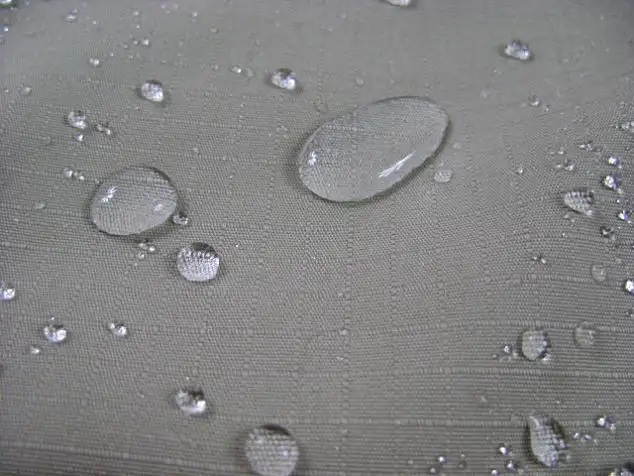
If your workwear fabrics use Teflon™ finishes or any fluorine-based DWR coating, they are now directly in scope of European regulation. The EU is moving to ban PFAS in consumer textiles — and in April 2025, the European Committee for Standardization (CEN) published a stricter test method, EN 17681-1:2025, that can detect PFAS that older standards missed entirely. The direction is clear: fluorine is being phased out of workwear fabrics, and brands that source from fluorine-free mills now will be ahead of those forced to reformulate under deadline pressure.
What Changed with EN 17681-1:2025
On 30 April 2025, CEN published EN 17681-1:2025 — a revised standard for detecting per- and polyfluoroalkyl substances (PFAS) in textiles. It replaces EN 17681-1:2022 and introduces a fundamental change in testing methodology: alkaline hydrolysis.
The previous standard used methanol extraction, which could only capture PFAS loosely bound on the fabric surface. The problem: fluorinated polymer finishes — including Teflon-type coatings — bond their fluorinated side chains directly to a polymer backbone. Under methanol extraction, these bound PFAS were largely invisible to the test. Under alkaline hydrolysis, those covalent bonds are broken, and the actual PFAS load of the fabric is revealed.
Key point: Fabrics that passed the old test may fail the new one — not because they became more contaminated, but because the test is now accurate. The standard applies to all textiles treated with water-repellent, oil-repellent, or stain-repellent finishes containing fluorine, even when those finishes are not declared on product descriptions.
The standard will be adopted by EU national bodies including BSI (UK) and DIN (Germany). For workwear brands exporting to Europe, this means compliance testing needs to be updated — and existing fabric suppliers must be able to demonstrate fluorine content under the new method.
Which Workwear Fabrics Contain Fluorine?
The most common source of PFAS in workwear fabrics is the functional finishing — not the fiber itself. Fluorinated DWR (Durable Water Repellent) coatings and Teflon™-type finishes have been the industry standard for decades because they deliver exceptional water and oil repellency that survives repeated washing.
Waterproof Outerwear
Jackets and shells using C6 or C8 DWR for beading performance in rain and wet environments.
Teflon™-Finished Workwear
Pants and jackets with WR + OR protection, widely used in oil & gas, automotive, and construction.
Triple-Protection Uniforms (WR/OR/SR)
Fluorine is currently the only chemistry delivering water, oil, and stain repellency simultaneously.
Food Service & Catering Uniforms
Chef jackets and food processing workwear where oil and liquid repellency are functional requirements.
Military & Tactical Fabrics
Often treated with Teflon for functional and IR-reflective applications in field conditions.
Note on Contamination
Fluorine can be present even in fabrics not intentionally treated — which is why EN 17681-1:2025 covers all repellency-treated textiles regardless of declared content.
Why Europe Is Banning PFAS: The “Forever Chemical” Problem
PFAS (per- and polyfluoroalkyl substances) are a group of over 10,000 synthetic chemicals defined by an exceptionally stable carbon-fluorine bond. That stability is why they work so well as repellent finishes — and why they are so dangerous as environmental contaminants.
The core issue is persistence. PFAS do not break down in the environment. They accumulate in soil, water, and living organisms. Epidemiological evidence links long-term PFAS exposure to thyroid disorders, immune suppression, certain cancers, and developmental issues in children. ECHA scientific committees have classified key PFAS compounds as substances of very high concern (SVHC).
The release pathway from workwear fabrics happens at three stages:
This lifecycle contamination profile — combined with the sheer volume of workwear produced globally — is why regulators moved from restricting specific PFAS compounds (C8, then C6) to pursuing a comprehensive ban.
The Regulatory Timeline: Where Things Stand Now
Regulation is moving on multiple fronts simultaneously. The key milestones relevant to workwear fabric buyers:
| Date | Regulation / Event | Scope |
|---|---|---|
| Apr 2025 | EN 17681-1:2025 published by CEN | New PFAS testing standard for all EU-facing textiles |
| Jul 2025 | Norway: PFAS ban in consumer clothing & footwear | Consumer garments; excludes professional PPE |
| Jan 2026 | France: National PFAS ban (Law No. 2025-188) | Consumer clothing, footwear, waterproofing agents; exemptions for industrial PPE and ≥20% recycled garments |
| Oct 2026 | EU REACH: PFHxA and related substances ban | Clothing, footwear, cosmetics |
| 2027 (est.) | EU universal PFAS restriction (REACH proposal) | Comprehensive ban on PFAS in textiles; sector-specific derogations under discussion |
| Jan 2030 | France: Extension to all textiles | Full textile ban; technical textiles may retain limited exemptions |
The practical takeaway: consumer workwear brands selling in France, Norway, and other early-mover markets are already under PFAS pressure today. Brands selling into the broader EU market are 12–18 months behind that timeline but moving quickly toward the same endpoint.
Fluoride-Free DWR vs. Teflon™: An Honest Comparison
The case for fluoride-free fabrics is straightforward from a compliance standpoint. From a performance standpoint, it is more nuanced. Brands need accurate data to manage customer expectations and make the right sourcing decisions.
| Performance Metric | Fluoride-Free DWR | Teflon™ Finish (C6) |
|---|---|---|
| Water repellency — before washing | 90 | 100 |
| Water repellency — after 5 washes | 70 | — |
| Water repellency — after 30 washes | — | 80 |
| Oil repellency — before washing | None | Grade 6 |
| Oil repellency — after 30 washes | None | Grade 4–5 |
| Wash durability | Moderate (5–10 washes) | High (30+ washes) |
| EU PFAS compliance (2025+) | ✓ Compliant | ✗ Non-compliant (consumer) |
| Certifications available | bluesign®, OEKO-TEX®, GRS | Limited (C6 only, with restrictions) |
The wash durability gap is the main practical challenge. For standard workwear washed at home or in light commercial settings, fluoride-free DWR performance is sufficient for the vast majority of use cases. For applications requiring oil repellency — food processing, automotive, oil & gas — no fluoride-free alternative yet matches Teflon. These sectors will likely be covered under essential-use exemptions during the EU transition period.
Industry Perspective
In my experience working with European and Australian workwear brands, the demand for fluoride-free options started as a compliance question — “do you have it?” — but has shifted into something more deliberate. Brands that made the switch early are finding their customers accept the tradeoff in wash durability, especially when it is explained transparently. The conversation has changed from “why should we switch” to “how do we manage expectations.”
My honest view: for most general workwear — construction, logistics, facility management — fluoride-free DWR is ready now. The wash durability is lower, and buyers should know that going in. But the starting repellency is good, the certification stack is clean, and the regulatory exposure goes to zero. For oil-contact applications, I tell clients honestly: the chemistry is not there yet. Teflon or C6 may still be necessary under essential-use exemptions until viable alternatives emerge.
— Leila Xia, Wuhan Prance Import & Export Co., Ltd (ripstopfabric.com)
How to Make the Transition: A Practical Framework
Switching from fluorinated to fluoride-free workwear fabrics is not a single decision — it is a process of mapping your product range against the risk profile and transitioning category by category.
Verify with your current fabric suppliers
Not every fabric mill is fully aware of EU PFAS regulations or the implications of EN 17681-1:2025. Start by asking your current suppliers directly: does this fabric contain fluorine-based finishing? Request written confirmation or a test report. At the same time, restate your compliance requirements clearly — many suppliers will respond to an explicit customer requirement faster than they respond to a regulation update they may not have tracked. This is the lowest-effort first step and often surfaces surprises.
Categorize by oil repellency requirement
Separate your range into applications that need oil repellency (OR) and those that need water repellency only (WR). The WR-only range can transition to fluoride-free now. The WR/OR range needs a case-by-case assessment of whether current exemptions apply to your specific end-use.
Specify the right fluoride-free chemistry for your base fabric
Fluoride-free water repellents vary significantly in how they interact with different base fabrics. Polyurethane-based agents perform well on poly-cotton blends and stretch constructions. Acrylic-based agents offer better cost efficiency but can stiffen hand feel on 100% cotton. Blended formulations tend to give the best balance. For stretch workwear specifically, our T/C Stretch Fluoride-Free Water Repellent Fabrics are developed to maintain mechanical stretch performance alongside DWR function — a combination that standard fluoride-free finishes often compromise.
Adjust care label instructions
Because fluoride-free DWR has lower wash durability, care label guidance matters more than it did with fluorinated finishes. Recommending lower wash temperatures, line drying, and periodic reproofing will significantly extend functional life and reduce the performance gap versus fluorinated alternatives.
FAQ
We supply fluoride-free water repellent fabrics
Available in 100% cotton, poly-cotton, and stretch constructions — ready for sampling.