
Stretch Workwear Fabrics
Workwear that moves with the body performs better and lasts longer. Stretch fabrics have become standard in professional trousers, jackets, and uniforms — but not all stretch is equal. This guide explains the key differences between stretch types, how they perform under real working conditions, and what to look for when sourcing for your programme.
Key topics
1. Mechanical stretch vs spandex stretch
Mechanical stretch comes from the weave structure itself — typically a twill or ripstop construction that allows natural give without elastic fibre. Spandex (elastane) stretch uses added elastic yarn to create stretch. Mechanical stretch tends to be more durable over time and performs better under industrial washing conditions, while spandex offers greater initial elasticity but can degrade faster under heat and repeated washing.
2. T400, EME, Sorona — what are they?
These are specialty stretch fibres increasingly used in workwear fabrics. T400 is a bi-component polyester fibre offering good stretch recovery and durability. EME is a mechanical stretch construction known for stability and low deformation. Sorona is a bio-based stretch fibre (derived from corn-sourced PDO) with excellent elastic recovery, a softer hand feel, and good industrial wash durability — making it the most sustainable option in this category. Each has different performance characteristics; the right choice depends on your application and wash requirements.
3. Stretch for trousers vs jackets vs uniforms
For work trousers, stretch in the warp direction (lengthwise) improves freedom of movement when bending or climbing. For jackets, bi-stretch (both directions) allows better fit across the shoulders and back. For uniforms in rental or repeat-wash programmes, durability and dimensional stability after washing matter more than maximum stretch percentage.
4. Why stretch fabrics fail after industrial washing
The most common failure mode is elastic recovery loss — the fabric stretches but no longer returns to its original shape. This typically happens when spandex fibres break down under high temperatures or repeated mechanical stress. The solution is to match the stretch construction to your actual washing conditions. For programmes involving frequent industrial laundering, fabrics using mechanical stretch constructions — such as EOL, EME, or ripstop-based mechanical stretch — or durable bio-based fibres like Sorona offer significantly better durability and shape retention over time.
5. What to check before ordering
Ask your supplier for stretch percentage (how much the fabric extends), elastic recovery rate (how well it returns to original dimensions), and wash durability data. For industrial programmes, confirm the fabric has been tested at your target wash temperature. Request a pre-washed sample — a fabric that looks good unwashed may behave very differently after 20 cycles.
Stretch type comparison
| Stretch type | Elasticity | Industrial wash (75 °C) | Typical GSM | Sustainability | Best for |
|---|---|---|---|---|---|
| Mechanical (twill / ripstop) | Moderate | Excellent | 200–280 gsm | Standard | Rental & high-wash programmes |
| T400 (bi-component polyester) | Good | Very good | 210–260 gsm | Standard | Trousers & jackets needing shape retention |
| EME / EOL | Good | Good | 200–270 gsm | Standard | Repeat-wash, dimensional stability |
| Sorona (bio-based PDO) | Excellent | Very good | 200–270 gsm | Bio-based · low carbon | Sustainable programmes, soft-hand workwear |
| Spandex / elastane | High | Limited | 180–240 gsm | Standard | Non-rental, low-wash applications |
* Industrial wash ratings assume 75 °C wash cycles. Performance varies with wash frequency and detergent. Always request wash durability data for your specific programme.
Our stretch fabric range
A selection of in-stock and in-development constructions. Click any card for full specs, or use the form below to request the complete catalogue.
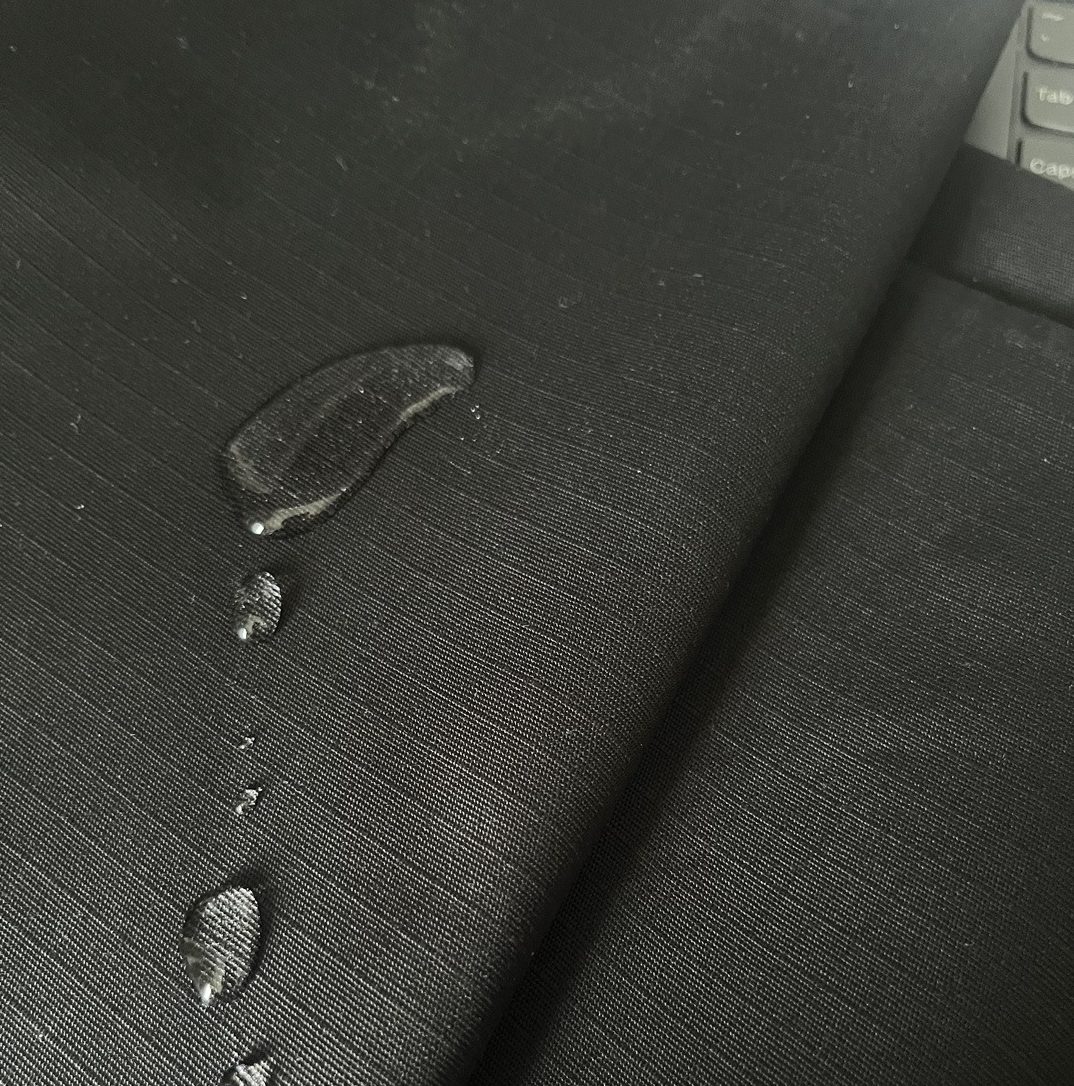
RP220
Ripstop T400 Spandex — 220 gsm
65% Polyester / 33% Cotton / 2% Spandex
Ripstop · Teflon finish · 153 cm
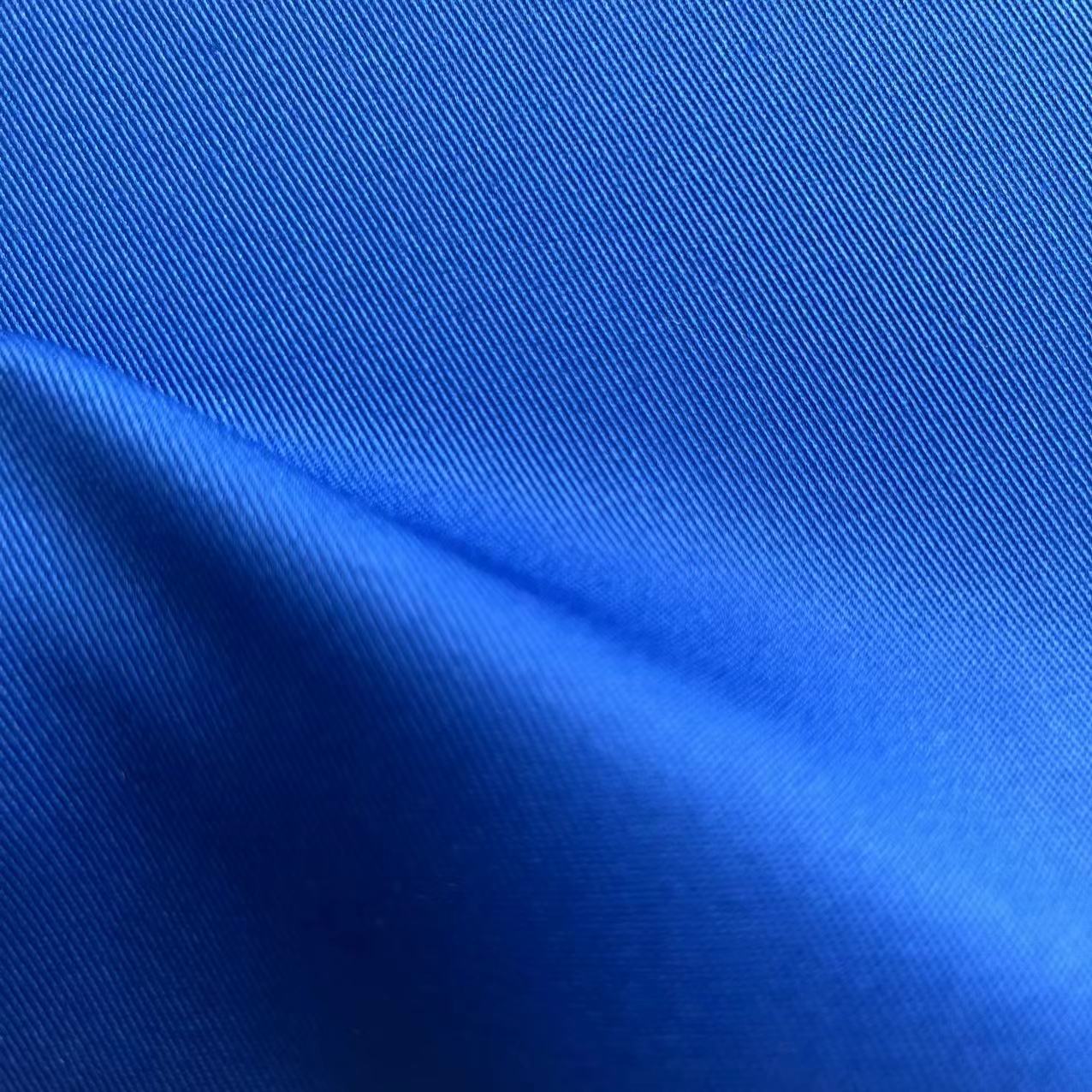
TCS260
Recycled / Organic Cotton XLA — 260 gsm
62% Recycled Polyester / 35% Organic Cotton / 3% Spandex XLA
Twill · Industrial laundry · Chlorine bleach resistant · 150 cm

RELAX220
Recycled Poly / Organic Cotton Stretch — 220 gsm
65% Recycled Polyester / 32% Organic Cotton / 3% Spandex
2/1 Twill · Sanfor · 150 cm
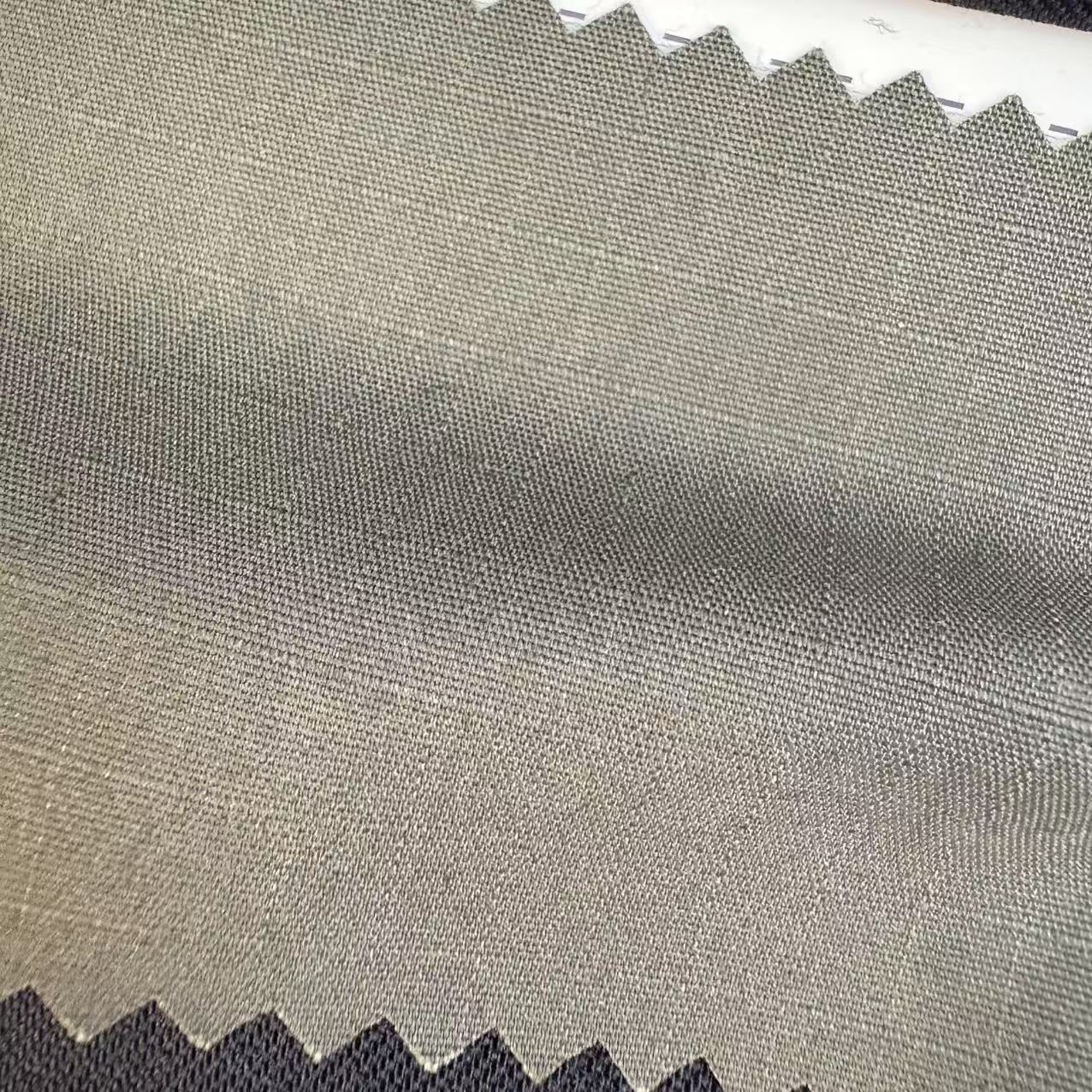
25244
Sorona® Stretch Ripstop — 165 gsm
39% Polyester / 21% Combed Cotton / 40% Sorona®
Ripstop 2×2 · Moisture wicking · Easy care · 142 cm
Frequently asked questions
Is mechanical stretch better than spandex for workwear?
For most professional workwear applications — especially those involving industrial laundering — mechanical stretch offers better long-term durability. Spandex provides more initial elasticity but is more vulnerable to degradation under heat and repeated washing.
What stretch percentage is typical for work trousers?
Most work trousers use fabrics with 20–35% stretch in one or both directions. Higher stretch percentages are common in more active or technical applications, but for standard uniform trousers, moderate stretch with good recovery is usually more important than maximum elasticity.
Can stretch fabrics be used in rental uniform programmes?
Yes, but fabric selection is critical. For rental programmes with frequent industrial washing, choose fabrics with low spandex content or mechanical stretch construction — or Sorona, which combines good wash durability with a bio-based fibre profile. Always verify wash durability data before committing to bulk production.
What is the difference between T400 and regular spandex?
T400 is a bi-component polyester fibre that provides stretch through its fibre structure rather than relying on rubber-like elastane. It offers better heat resistance and wash durability than standard spandex, making it more suitable for workwear applications requiring repeated industrial laundering.
What is Sorona and why is it used in workwear?
Sorona is a bio-based fibre made using PDO (1,3-propanediol) derived from corn fermentation, developed by DuPont. It offers excellent elastic recovery, a soft hand feel, and good industrial wash durability — combined with a lower carbon footprint than petroleum-based stretch fibres. It is increasingly specified by European workwear brands with sustainability requirements.
What is the minimum order quantity for stretch workwear fabric?
MOQ depends on whether the fabric is in stock or requires custom weaving. For available constructions, the minimum order is typically 3,000–5,000 metres per colour. For custom-woven constructions made to your specific requirements, MOQ is higher — usually around 10,000 metres. Send us your construction details and we can confirm availability and quantity.
Related articles
Looking for stretch fabric for your workwear or uniform programme? Send us an email with your application, target stretch level, and wash requirements — we will match you with the right options and arrange a sample.
✉ Email us now