
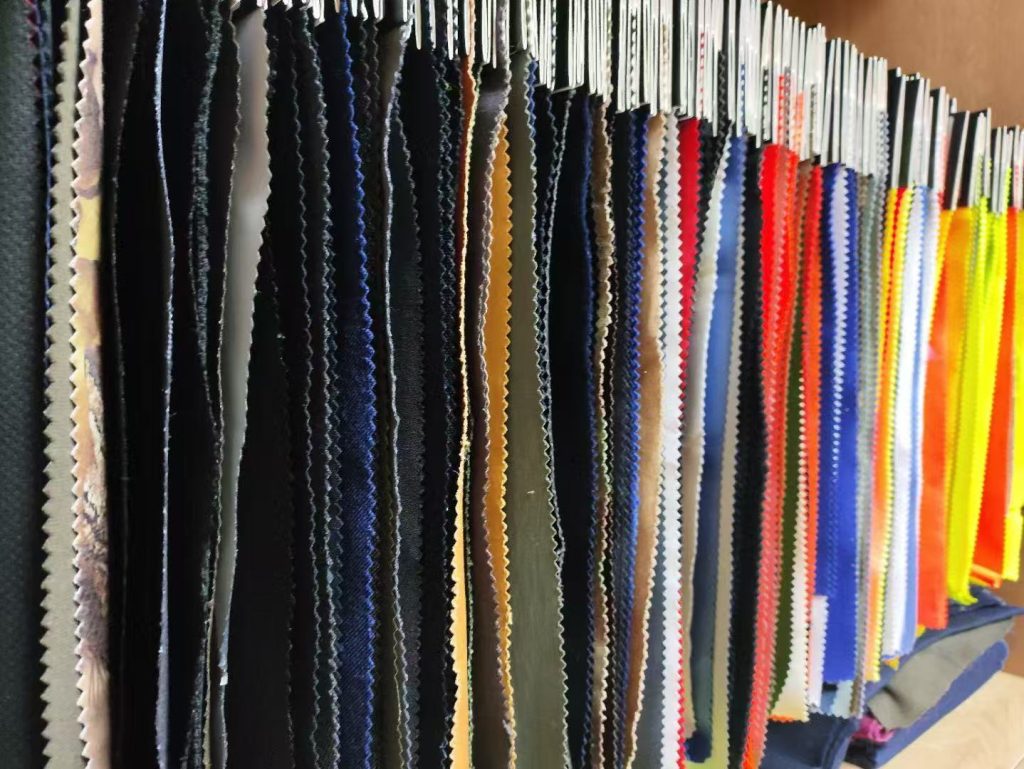
Many overseas buyers have had this experience.
They have a fabric that works very well in their local market. The quality is good and the garments last for years. But when they try to source the “same fabric” from China, the result is often disappointing.
The fabric may look similar at first glance, but after touching it or using it, the difference becomes obvious.
Some buyers then conclude that fabric from China is lower quality.
But in many cases, the real problem is not the manufacturing capability. The problem is that the buyer and the supplier are actually talking about two different fabrics.
In this article, I want to share a real case and explain why this situation happens so often in fabric sourcing.
Fabric sourced from China sometimes feels lower quality because the buyer and supplier are not working with the same fabric specifications. Even if the fiber composition is the same, differences in yarn count, density, weave structure, and spinning method can completely change the final fabric. Without analyzing the original sample and confirming these parameters, the supplier may produce a fabric that looks similar but performs very differently.
A Real Case From One of Our Customers
A few days ago, a customer contacted me and asked if I could help check two fabrics.
He had been using a local T/R fabric to produce uniform trousers for many years. The fabric quality was very good, and the trousers could normally be worn for four to five years.
However, the local price was quite high. So he wanted to find a supplier in China to produce the same fabric at a more competitive cost.
He contacted several suppliers and requested samples. After a few attempts, he finally selected one supplier and placed an order of several thousand meters.
But when the bulk fabric arrived, he immediately felt something was wrong.
The hand feel was different.
The structure looked different.
The fabric did not feel as strong as the original one.
So he sent both fabrics to me for analysis.
The Two Fabrics Look Similar — But The Specifications Are Very Different
After checking the fabrics, we compared their specifications.
| Item | Original Fabric | Fabric Sourced From China |
|---|---|---|
| Composition | T65/R35 | T65/R35 |
| Yarn Count | 16×16 | 21×16+70D |
| Density | 96×52 | 68×60 |
| Weave | 2/1 Left Twill | 2/1 Right Twill |
| Spinning | Vortex Spinning | Different construction |
At first glance, both fabrics are called T/R twill fabric.
But once you look at the numbers, you can see they are actually two completely different fabrics.
Where the Difference Comes From
Yarn Count
The original fabric uses 16×16 yarn count.
The fabric sourced from China uses 21×16+70D.
This already changes the structure significantly. The warp yarn becomes finer and also includes filament yarn, which creates a different surface feel and strength performance.
For uniform trousers or workwear, yarn count plays an important role in durability.
Fabric Density
The original fabric density is:
96×52
But the Chinese fabric is:
68×60
This means the yarn distribution is completely different.
Higher warp density usually creates a tighter and more durable fabric, which is important for uniforms that need long service life.
This is one of the main reasons the customer felt the new fabric was weaker.
Twill Direction
Another detail is the twill direction.
The original fabric uses 2/1 left twill, while the Chinese fabric uses 2/1 right twill.
This may not change durability significantly, but it changes the appearance and surface texture. Experienced buyers can notice this difference quickly.
Spinning Method
The original fabric uses vortex spinning.
Different spinning technologies can influence:
- fabric strength
- pilling resistance
- fabric surface texture
So even if two fabrics have the same composition, the feel and performance can still be quite different.
Why This Happens So Often in Fabric Sourcing
This case clearly shows one important point.
When buyers ask for a fabric, they often only describe it in a very general way.
For example:
- T/R fabric
- twill fabric
- uniform fabric
But these descriptions are not technical specifications.
In textile production, small differences in parameters can create a completely different fabric.
If the supplier does not analyze the original sample carefully, they can only produce a similar fabric, not the same one.
Why Fabric Analysis From Different Suppliers May Be Different
Another issue many buyers encounter is that different suppliers sometimes give different fabric analysis results.
For example, one supplier may say the density is 96×52, while another may say 94×54.
This happens because fabric analysis is not always perfectly precise. Some factories rely on manual counting, and experience also plays a role.
For this reason, it is often helpful to send samples to multiple suppliers and compare their analysis results. When two or more suppliers provide similar parameters, the data is usually more reliable.
How to Reproduce a Fabric From Another Country in China
If you already have a fabric that works well in your market and want to produce it in China, it is better to follow a structured process.
1. Get Enough Original Fabric
Try to obtain at least one meter of the original fabric.
A very small swatch is usually not enough for proper analysis.
2. Confirm the Basic Information
Check the fiber composition, which is usually written on the garment label.
For example:
T65/R35
Polyester / Rayon
This gives the supplier a starting point.
3. Send Samples to Multiple Suppliers
It is better to contact at least three suppliers.
Cut the original fabric into small pieces (for example 10 × 10 cm) and send them for analysis.
Ask them to check:
- yarn count
- density
- weave structure
If two suppliers give similar results, the parameters are more reliable.
4. Do Not Skip Fabric Sampling
Some suppliers may say:
“We can make it the same without sampling.”
If your quality requirement is high, it is better not to skip this step.
Sampling takes time and costs money because the factory must adjust production machines. But it is still much cheaper than discovering problems after producing thousands of meters.
5. Test the Sample Carefully
When you receive the developed sample, compare it with the original fabric.
Check things such as:
- color
- hand feel
- fabric weight
- washing performance
For workwear fabrics, some buyers also test performance indicators such as color fastness, shrinkage, pilling resistance, and tensile strength.
In our daily work at Wuhan Prance Import & Export Co., Ltd., we often help overseas customers analyze their original samples and reproduce similar fabrics in China. Many sourcing problems are actually caused by missing technical data rather than manufacturing capability.
6. Confirm Bulk Fabric Before Shipment
Before shipment, always ask the supplier to send 2–3 meters randomly cut from the bulk production.
Compare it with:
- the original sample
- the approved development sample
If everything matches, you can approve the shipment.
This simple step can prevent many expensive sourcing mistakes.
Final Thoughts
China is one of the largest textile manufacturing centers in the world. It produces fabrics across every quality level.
When buyers receive fabric that does not meet their expectations, the reason is often not the country of origin. More often, it is because the original fabric specifications were never clearly defined.
If buyers analyze the original sample carefully, confirm the technical parameters, and follow a proper sampling process, it is absolutely possible to reproduce high-quality fabrics in China for uniforms, workwear, and many other applications.
Frequently Asked Questions
Why does fabric sourced from China sometimes feel different from the original sample?
In many cases the supplier does not have the full fabric specifications. Even if the fiber composition is the same, differences in yarn count, density, weave structure, or spinning method can produce a very different fabric.
What information should I give a fabric supplier to reproduce a fabric?
The most helpful information includes:
- original fabric sample
- fiber composition
- yarn count
- fabric density
- weave structure
- fabric weight (GSM)
Providing a physical sample is usually the most reliable way for a supplier to analyze the fabric construction.
Is it possible to reproduce a fabric from another country in China?
Yes. Many fabrics can be reproduced in China if the supplier can analyze the original sample and confirm the correct construction parameters. The key steps include sample analysis, development sampling, and bulk confirmation before shipment.